
- Reovery Peptide Therapy · Colorado
Recovery Peptide Therapy in Colorado
Built on real medical oversight.
Some injuries take longer to heal than they should. Recovery improves, then stalls. Pain settles down, then returns. Weeks turn into months, and despite doing the right things, progress never feels complete.
At BreakthruRx, we work with patients dealing with soft tissue injuries, tendon and ligament damage, post-surgical recovery, and chronic joint concerns that haven’t responded the way they hoped. Recovery peptide therapy is prescribed and monitored by licensed healthcare professionals, with every protocol built around your health history, injury type, and recovery goals.
When Recovery Stalls
The body has a natural capacity for repair, but that capacity has limits and for a lot of patients, those limits show up in predictable ways. Injuries that improve but never fully resolve. Joints that stay inflamed well past what the original damage would suggest. Muscle or tendon recovery that lags noticeably behind the rest of your training.
Recovery peptide therapy works by supporting the biological processes your body already uses to repair tissue reinforcing what it’s trying to do at the cellular level, in ways conventional treatment alone often can’t match.
- PRODUCTS
Recovery Peptides Used in
Treatment
All compounds are sourced from FDA-registered suppliers and undergo third-party testing. Your provider selects the right protocol based on your health evaluation and the nature of your injury.
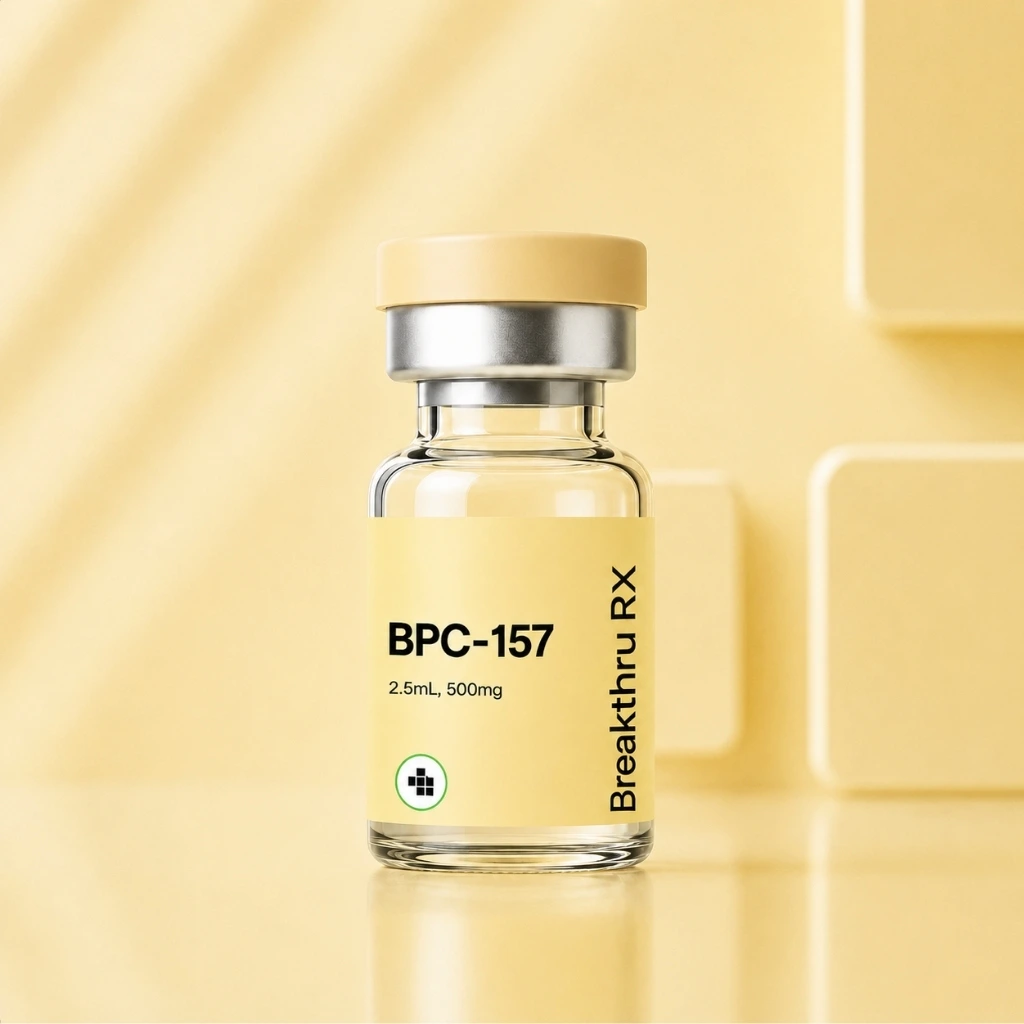
BPC-157
The most widely prescribed recovery peptide at BreakthruRx. It’s primarily used for patients dealing with soft tissue, ligament, tendon, and muscle injuries, as well as GI disorders including leaky gut and ulcers. It supports the body’s natural healing response, reduces inflammation, and aids tissue regeneration at the injury site. Patients typically notice reduced soreness and improved mobility within the first few weeks of consistent use. Full recovery timelines vary depending on injury type and severity.
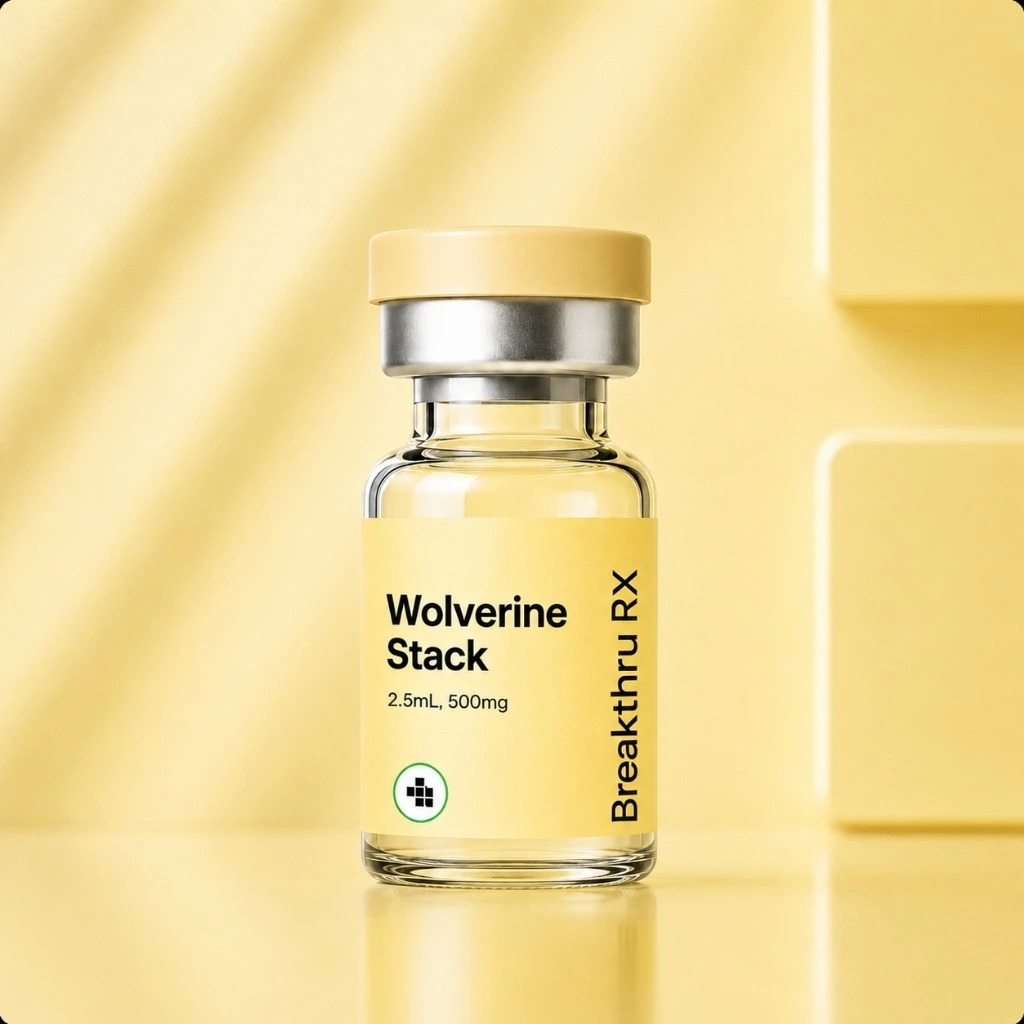
Wolverine Stack
For patients dealing with more significant injuries or recovery that’s already stalled, BPC-157 and TB-500 are frequently prescribed together. The two compounds support complementary aspects of tissue repair BPC-157 targeting localized healing and inflammation, TB-500 supporting broader tissue remodeling and circulation to the injury site. This combination is commonly used after surgery, for chronic joint conditions, and for injuries that haven’t responded to standard treatment.
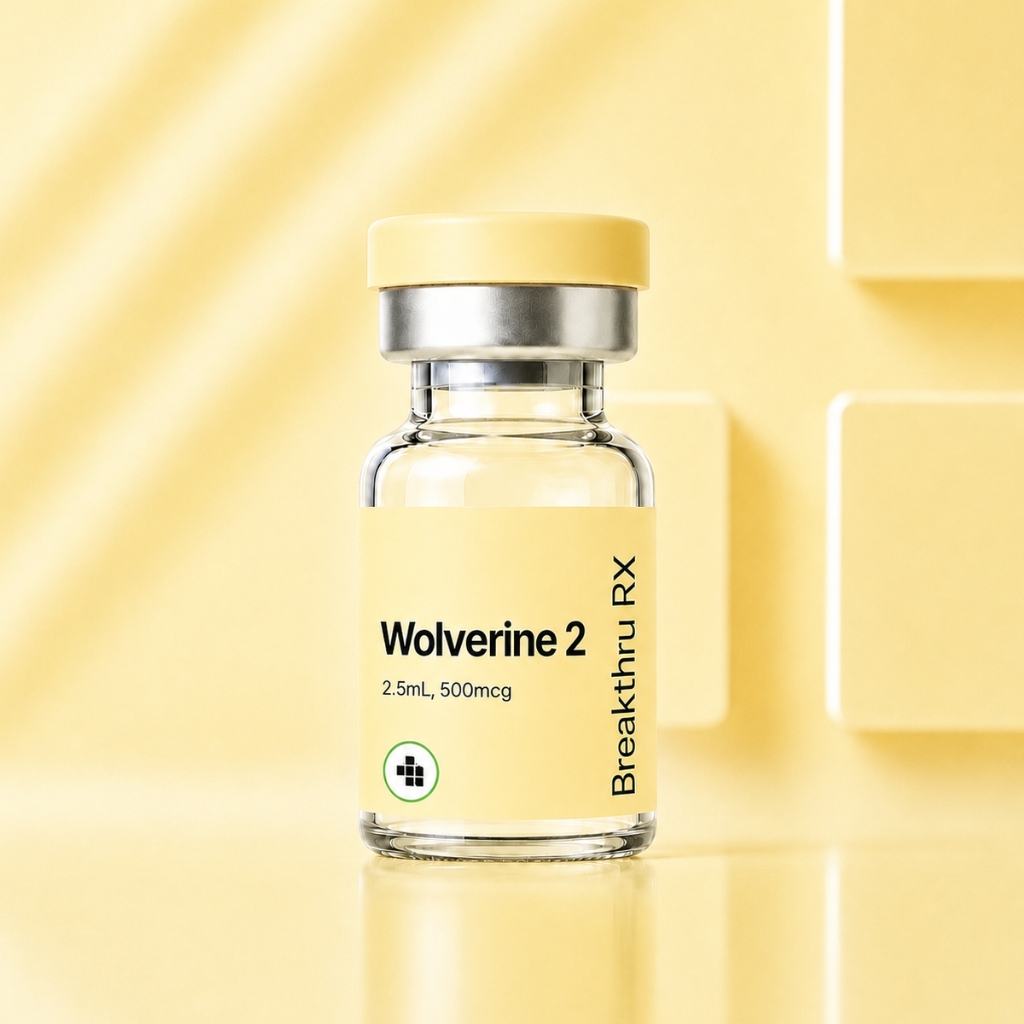
Wolverine Stack 2
For patients with gut-related recovery concerns, such as Crohn’s disease, leaky gut, IBS, or chronic intestinal inflammation, KPV may be recommended as part of or alongside a broader recovery protocol. It’s known for its anti-inflammatory and antimicrobial properties at the intestinal level.
“Not sure which fits your goals? That’s what your evaluation is for.”
- Recovery Peptide Therapy Right for You?
A few honest patterns.
Patients come to BreakthruRx with a wide range of recovery concerns. The most common include:
- Soft tissue injuries muscle tears, strains, and damage that haven't fully healed
- Tendon and ligament injuries including chronic issues in the knee, shoulder, ankle, and elbow
- Post-surgical recovery particularly when healing has plateaued or slowed
- Chronic joint inflammation that responds temporarily but keeps returning
- GI and gut-related recovery including leaky gut, IBS, and intestinal lining damage
Your provider determines which protocol fits your injury and health profile during your evaluation. Not every compound is appropriate for every patient that determination is made clinically, not generically.
What Physician-Guided Recovery Care Looks Like
Recovery peptide therapy, prescribed and managed by a licensed provider, looks meaningfully different from what patients find online.
Before Prescribing
Your nurse practitioner reviews your health history and risks. BPC-157 and TB-500 may not be suitable for patients with active cancers or severe bleeding disorders, as determined during evaluation.
Once Your Protocol Starts
Dosing is managed based on injury type and your response over time. Your provider adjusts as healing progresses you're not on a fixed protocol from week one to week twelve.
Throughout Your Program
A board-certified health coach stays with you. Check-ins track your progress and flag anything that needs clinical attention. Follow-up is built in, not optional.
- Recovery Peptide Therapy Right for You?
Is Recovery Peptide Therapy Right for You?
Recovery peptide therapy tends to work best for patients whose healing has stalled or who aren’t getting the full recovery they need from conventional treatment alone. Common patient profiles at BreakthruRx:
- Active adults and athletes dealing with soft tissue, tendon, or ligament injuries that haven't fully resolved
- Patients recovering from surgery whose healing has plateaued
- Men and women with chronic joint pain that temporarily responds to treatment but keeps returning
- Patients dealing with gut-related conditions, including IBS, leaky gut, or intestinal inflammation
Who may not be a candidate: Active cancers, hypersensitivity to peptide components, and severe bleeding disorders typically rule out BPC-157 and TB-500 protocols. Your provider reviews your full health history before anything is prescribed.
- Process
How To Get Started
No standard path here. The process is built around gathering the right information before anything else happens.
Step 01
Free Consultation
Reach out or fill in a brief form. A BreakthruRx team member connects with you to discuss your injury, symptoms, and goals before any commitment.
Step 02
Health Assessment
A licensed nurse practitioner reviews your complete health history via telehealth or in-person. Your recovery protocol is built from this evaluation.
Step 03
Ongoing Support
Once approved, your prescription ships directly to your door from FDA-registered, third-party-tested suppliers. Your health coach stays with you through your full program.
- FAQs
Frequently Asked Questions
Have Any Question? Here are some questions that most people ask us!
How long does recovery peptide therapy take to work?
It depends on the injury type, severity, and protocol. Patients dealing with soft tissue injuries often notice reduced soreness and improved mobility within the first few weeks. More significant joint or tendon damage, or post-surgical recovery, typically takes longer. Your provider sets realistic expectations based on your specific situation at your evaluation.
Can I use recovery peptides alongside other treatments?
In most cases, yes. Recovery peptides are often used alongside physical therapy, rehabilitation, and other medical care, not instead of them. Your provider will review your current treatment plan during your evaluation.
Are these compounds safe?
Is this covered by insurance?
Do I inject this myself?
Ready to Have a Conversation About Your Health Goals?
Start with a conversation about your goals, your concerns, your questions. Whether you’re focused on weight management, recovery, healthy aging, or just maintaining your quality of life, the consultation is where it all begins. No pressure, no assumptions just a real discussion about what might actually help.
