
- Products
Wolverine Stack
BPC-157 + TB-500 Peptide Protocol for Tissue Repair and Recovery
If you’ve been searching the Wolverine Stack, you’ve probably seen it talked about everywhere, in podcasts, biohacking forums, and athletic recovery communities. The name is informal. The peptides behind it are real, and so is the research interest. This page covers what the WolverineStack actually is, what BPC-157 and TB-500 each do, what the science genuinely supports, where the regulatory situation stands right now, and what working with Breakthru Rx looks like if you want to explore this properly.
One thing upfront, neither BPC-157 nor TB-500 is FDA-approved. That shapes everything else on this page.
- Product Details
Wolverine Stack Overview
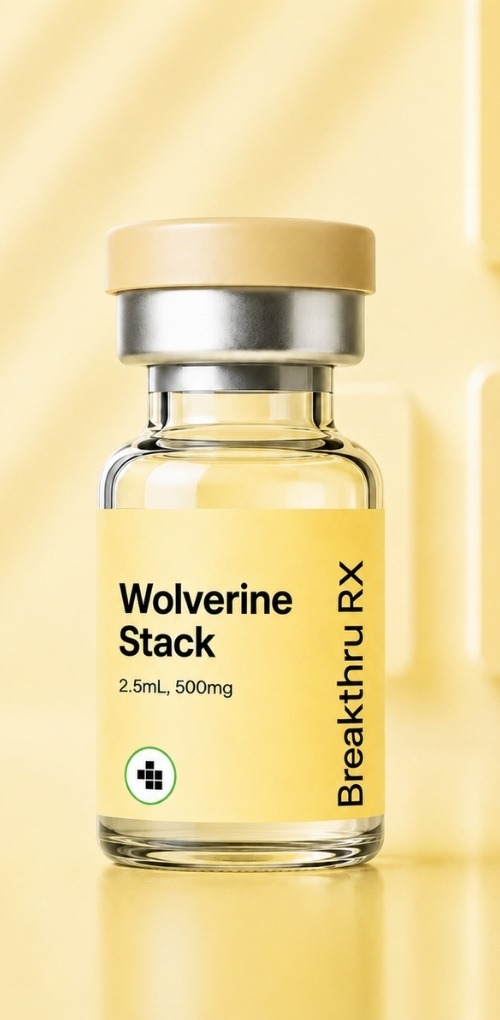
Wolverine Stack Formula
The Wolverine Stack is a nickname in peptide research communities for combining BPC-157 and TB-500 two peptides studied for soft tissue healing, inflammation reduction, and cellular regeneration.
- BPC-157 is a synthetic 15-amino acid peptide derived from human gastric juice with over 200 published studies, almost all in animal models. A 2025 HSS Journal case series reported that 7 of 12 patients with chronic knee pain had relief lasting over six months after intra-articular injection. Human confirmation beyond that remains limited.
- TB-500 is a synthetic fragment of Thymosin Beta-4, a naturally occurring repair protein found in nearly every cell. It works systemically driving repair cells to injury sites throughout the body rather than acting locally. No registered human clinical trials for the TB-500 fragment exist as of 2026.
No published trial has tested these two together as a combination. All context comes from compound-level research on each peptide separately. At Breakthru Rx, we tell you that upfront because honest expectations are part of how we work.
Key Ingredients
BPC-157 and TB-500 are studied for different but complementary mechanisms, which is why they’re often paired:
BPC-157 Growth Factor and Angiogenesis Pathway
- VEGF upregulation promotes new blood vessel formation, increasing blood flow to injured tissue
- Nitric oxide system interaction supports vascular signaling and cellular repair
- Collagen synthesis animal studies show accelerated tendon-to-bone healing and connective tissue remodeling
- Anti-inflammatory activity: cytoprotective effects documented across multiple tissue types in preclinical work
- Gut protection derived from gastric juice; animal studies show effects on ulcer healing and gut barrier function
TB-500 Actin-Binding and Cell Migration Pathway
- Actin sequestration: TB-500 binds to monomeric G-actin through the LKKTET motif, enabling cells to move freely toward injury sites
- Cell migration drives repair cells to damaged tissue systemically, not just at the injection site
- Angiogenesis support: downstream activation of VEGF expression supports new capillary formation in animal models
- Inflammation modulation reduces the inflammatory load that slows tissue repair in preclinical studies.
- Hair follicle and wound healing: Thymosin beta-4 has shown effects on hair follicle stem cell migration in animal models
The reason these two are stacked together is that BPC-157 addresses growth factor signaling and localized tissue repair while TB-500 handles systemic cell migration and structural support. They target different stages of the same healing process, which is the basis for the combination.
Benefits
Based on current preclinical research, the Wolverine Stack is studied for:
- Soft Tissue Repair: Both peptides show consistent effects in animal models across muscle, tendon, ligament, and bone injury. BPC-157 has the most extensive preclinical record of any research peptide in orthopaedic sports medicine (Vasireddi et al., HSS Journal 2025 systematic review).
- Recovery Support: TB-500’s systemic mechanism means it can reach injury sites throughout the body from a single injection point, which is why it’s frequently discussed in recovery protocols alongside BPC-157.
- Inflammation Reduction: Both peptides show anti-inflammatory properties in animal studies. BPC-157 through cytoprotective pathways, TB-500 through TGF-β1 attenuation and immune modulation.
- Gut Health (BPC-157 specific): Derived from gastric juice, BPC-157 has shown protective effects on gut tissue and ulcer healing in animal models.
- Connective Tissue and Skin (with GHK-Cu): Some protocols add GHK-Cu to the Wolverine Stack for additional connective tissue and collagen support, creating what some in the research community call a broader recovery stack.
At Breakthru Rx, we tell you what the evidence actually shows, which is genuinely interesting preclinical data and very limited human confirmation. A provider who tells you otherwise is getting ahead of the science.
Daily Usage
At Breakthru Rx, dosing is determined individually by your licensed provider. We don’t publish generic protocols here because the right approach depends on your injury history, goals, and clinical situation.
- BPC-157: Most research protocols use 250 -500mcg once or twice daily via subcutaneous injection. Oral use has been explored in animal studies for gut applications.
- TB-500: Typical research protocols use a loading phase (higher dose weekly for the first 4–6 weeks) followed by a maintenance phase (lower dose monthly or bi-weekly). TB-500 has a longer half-life than BPC-157, so timing is more flexible.
- Combination: Both can be administered separately on the same day. Pre-blended vials (typically 5mg/5mg) exist in the research market, but dosing ratios in blends may not match what your individual protocol requires your Breakthru Rx provider will walk you through which approach makes clinical sense for you.
Consistency matters more than timing. Your provider monitors your response and adjusts the plan based on how you’re actually progressing.
Features
What you get at Breakthru Rx that most online sources and unregulated sellers don’t provide:
- Complementary mechanism pairing: BPC-157 and TB-500 target different but overlapping stages of the healing process. Understanding why they’re combined, not just that they’re combined, is part of what we walk you through.
- Honest regulatory picture: Neither peptide is FDA-approved. TB-500 is under WADA prohibition. BPC-157 was removed from the FDA’s Category 2 restricted compounding list in April 2026, with an advisory committee review scheduled for July 23, 2026. We stay current on all of this and work only within compliant pathways.
- Licensed provider from day one: Every Breakthru Rx patient works with a real clinician who reviews their health history, discusses their goals, and monitors their progress. Not a checkout experience.
- Personalized protocol: Your dosing, schedule, and combination are determined by your provider based on your actual clinical picture, not a forum recommendation.
- Telehealth and in-person options: Serving Denver, Parker, Aurora, Centennial, Lone Tree, Castle Rock, and Highlands Ranch.
Quality
Independent third-party testing of grey-market peptide products has documented variable purity, residual solvents, and endotoxin contamination across unregulated suppliers. The FDA has received adverse event reports linked to improperly sourced compounded peptides. Source quality matters especially with injectable compounds.
At Breakthru Rx, everything we work with is third-party tested for potency and purity, screened for heavy metals and microbial contaminants, and backed by batch-level documentation and a certificate of analysis available on request.
We don’t ask you to take quality on faith. And we don’t work with sources that do.
Manufacturing Process
BPC-157 is produced through solid-phase peptide synthesis a chemical process that assembles the 15-amino acid sequence one unit at a time. TB-500 is similarly synthesized as a 7-amino acid fragment, acetylated at the N-terminal (Ac-LKKTETQ) to match the active actin-binding region of thymosin beta-4.
The quality of the end product depends entirely on synthesis controls, purification processes, and post-production handling. Both peptides are sensitive to temperature and require cold-chain storage and proper reconstitution with bacteriostatic water before use.
At Breakthru Rx, we work only with sources that can document manufacturing practices, cold-chain compliance, and batch consistency from production through delivery. Ask us for documentation we share it without hesitation.
Our products come from 503A compliant facilities.
How It Works in the Body
After administration, BPC-157 and TB-500 act through separate but complementary pathways toward the same general outcome: tissue repair and recovery:
- BPC-157 pathway: acts locally and through systemic circulation to upregulate VEGF, promoting new blood vessel growth at injury sites. Stimulates growth hormone receptor expression in tendon fibroblasts. Interacts with nitric oxide pathways to reduce inflammation and support cellular signaling. Effects are most consistent in musculoskeletal and gut tissue in animal models.
- TB-500 pathway: Binds to monomeric G-actin throughout the body, freeing cells to migrate toward injury sites rather than staying anchored. Activates Akt-pathway signaling in endothelial cells, supporting angiogenesis. Works systemically, meaning a single injection site can reach multiple injury locations. This is the key practical difference from BPC-157‘s more localized mechanism.
- Together, BPC-157 builds the vascular infrastructure at the injury site while TB-500 drives the repair cells to the location. Most patients working with Breakthru Rx begin noticing changes in pain, inflammation, and mobility within the first 4–8 weeks of consistent, supervised use. Monitoring is how we track whether it’s working for you and how we adjust when it isn’t.
Wolverine Stack Benefits
- Physician led care at every stage
- Tailored protocol built around your injury and recovery goals
- Ongoing monitoring not a one time purchase
- Complementary mechanisms targeting different stages of tissue repair
- Accessible care across Colorado's Front Range
Wolverine Stack Considerations
- Neither BPC-157 nor TB-500 is FDA approved
- Human clinical evidence limited mostly preclinical animal models
- Both peptides WADA-prohibited not for athletes
- Cancer history? Disclose theoretical angiogenesis concern with TB-500
- Side effects: injection reactions, headache, fatigue, mild nausea
Need More Info?
- Testimonials
TRUSTED BY PATIENTS
EXCELLENTBased on 48 reviews
- Service Areas
Areas We Serve
Frequently Asked Questions
Have Any Question? Here are some questions that most people ask us!
Does Breakthru Rx offer Wolverine Stack peptide therapy in Colorado?
Yes at Breakthru Rx, we offer BPC-157 and TB-500 through a fully provider-led consultation process. You work directly with a licensed clinician who reviews your injury history, goals, and health picture before any protocol is discussed.
Is the Wolverine Stack from Breakthru Rx FDA-approved?
No and we will always be straight with you about that. Neither BPC-157 nor TB-500 is FDA-approved. BPC-157 was removed from the FDA’s Category 2 restricted list in April 2026 and is under advisory committee review scheduled for July 2026. At Breakthru Rx, we work only within compliant pathways and stay current on every regulatory update.
How do I get the Wolverine Stack from Breakthru Rx if I live in Parker?
Book a free consultation virtual or in-person and we handle everything from there. Breakthru Rx serves Parker, Castle Rock, Highlands Ranch, Centennial, Lone Tree, Aurora, and the greater Denver metro with the same licensed provider and same standard of care wherever you are.
Why choose Breakthru Rx for Wolverine Stack therapy in Colorado?
How much does a Wolverine Stack consultation at Breakthru Rx cost?
Your first consultation at Breakthru Rx is free. Ongoing plan pricing is reviewed clearly with you before anything is decided no hidden fees, no surprises.
Ready to Have a Conversation About Your Health Goals?
Whether you’re dealing with a persistent injury, slow recovery, or just want to understand your options — it starts with a real conversation. No pressure. No assumptions. Just an honest discussion about what’s going on and what might actually help you.
Working with patients across Colorado, Breakthru Rx builds personalized, medically guided approaches to long-term wellness. When you’re ready, we’re here.
